How to Identify Dangerous Drug Interactions (Expert Tips)
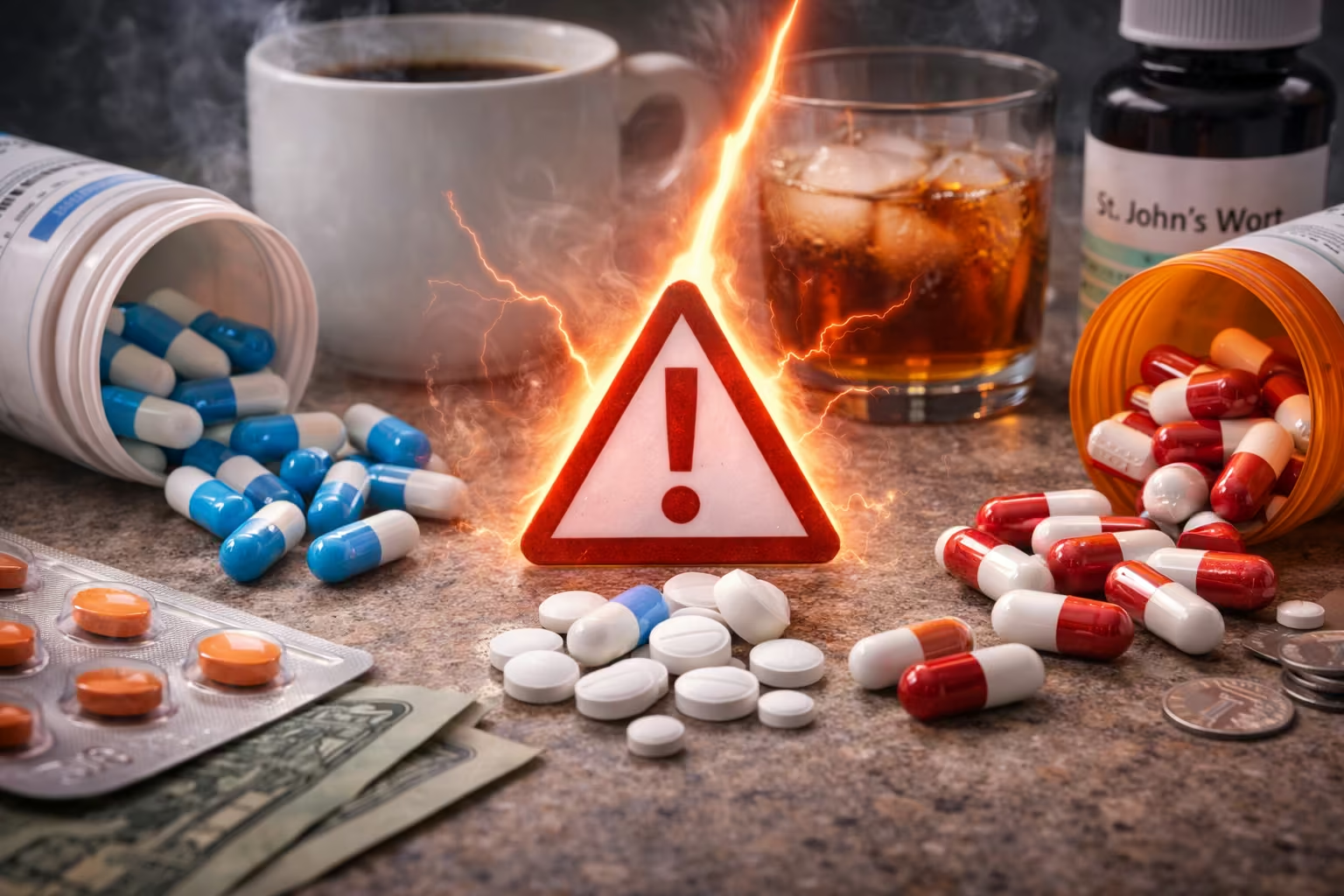
Have you ever looked at a tiny white pill and wondered if it would play nice with your morning coffee or that herbal tea you love? Most people take medicine to feel better. But sometimes, mixing the wrong things can make you feel much worse. This guide will help you spot dangerous drug interactions before they start. We will look at warning signs, latest 2026 safety rules, and simple steps to keep your family safe.
"The best medicine is knowing how to use your medicine safely." — Muhammad Yasir Imam.
What is a Drug Interaction Anyway?
At its simplest, a drug interaction happens when one substance changes how another drug works in your body. It is like a traffic jam inside your veins. One car (the drug) is trying to get to work (your headache or heart), but another car (a different drug or food) gets in the way.
There are three main ways this happens:
- Drug-Drug Interactions: This is when two or more medicines do not mix well.
- Drug-Food Interactions: This is when what you eat or drink changes your medicine.
- Drug-Condition Interactions: This is when a medicine makes a health problem you already have feel worse.
Knowing how to identify drug interactions starts with being curious. Do not just swallow and hope. Ask questions.
Why You Should Care About Serious Drug Interactions?
In 2026, medical experts found that over 2 million people end up in the hospital every year because of medication mistakes. Many of these are serious drug interactions that could have been stopped. When drugs clash, they can cause your blood pressure to spike, make you super dizzy, or even stop your breathing.
If you want to find the best local prices for your safe medications, you can visit Medicine Finder Online for help.
Common Drug Interaction Warning Signs
Your body is very smart. It will often tell you when something is wrong. You just have to listen. Here are the most common drug interaction warning signs to watch for:
- Sudden Rashes: If your skin gets red or itchy right after a new pill, take note.
- Deep Tiredness: Feeling like you cannot keep your eyes open.
- Fast Heartbeat: Feeling like your heart is racing for no reason.
- Stomach Pain: Sharp cramps or feeling like you need to throw up.
- Confusion: Forgetting where you are or feeling "fuzzy" in the head.
If you notice these drug interaction symptoms, do not wait. Call your doctor or a pharmacist right away.
How to Check Drug Interactions Like a Pro?
You do not need to be a doctor to stay safe. You can learn how to check drug interactions using simple tools.
Use a Drug Interaction Checker
One of the best ways is to use a drug interaction checker online. These tools let you type in the names of your pills. They then tell you if those drugs are friends or enemies. A drug interaction checker online free is a great first step, but always double-check with a real human pharmacist.
Read the Label
Every medicine comes with a paper called a "patient insert." It has a section for drug interaction warning signs and "Contraindications." This is a big word that means "times when you should NOT take this drug."
Dangerous Medication Combinations to Avoid
Some drugs are known troublemakers. When they meet, sparks fly—and not the good kind. Here are some dangerous medication combinations that experts worry about most in 2026:
- Blood Thinners and Aspirin: can cause severe drug reactions like internal bleeding.
- Pain Pills and Sleep Meds: Mixing opioids with "benzos" (anxiety pills) is very risky. It can slow your breathing too much.
- Alcohol and Everything: Alcohol is a drug too. It makes almost every side effect worse.
Understanding the Science of Pharmacokinetics and Pharmacodynamics
To really know how to prevent drug interactions, we need to look at how drugs move.
Pharmacokinetic interaction is about how your body moves the drug. Your liver uses something called the cytochrome P450 enzyme to break down pills. If one drug hogs all the enzymes, the other drug builds up in your blood. This is called drug metabolism. If it slows down too much, you could face a black box warning situation.
Pharmacodynamic interaction is when two drugs try to do the same thing. For example, if two drugs both lower blood pressure, your pressure might drop too low. This leads to medication interaction risks like fainting.
High-Risk Medications and Polypharmacy
If you take five or more pills a day, doctors call this polypharmacy. The more pills you take, the higher the chance of severe drug reactions.
High-risk medications include:
- Blood thinner interactions: These need constant medication safety monitoring.
- Serotonin syndrome: This happens when you mix certain antidepressants or pain meds. It makes you sweaty, shaky, and confused.
- QT prolongation: This is a fancy way of saying your heart rhythm gets messed up. Some antibiotics and heart drugs cause this.
How to Identify Life-Threatening Drug Reactions?
Sometimes a reaction is more than just an upset stomach. You need to know how to identify life-threatening drug reactions immediately.
Warning signs of medication interaction that mean "Go to the ER":
- Your throat or tongue starts to swell.
- You cannot catch your breath.
- You feel like you are going to pass out.
- You see a "bullseye" rash or skin peeling.
These are symptoms of serious drug interactions that need a doctor's help within minutes.
The Role of the FDA and Drug Safety Alerts
The government keeps an eye on us. FDA drug safety alerts come out when a drug is found to be more dangerous than we thought. In 2026, the FDA updated drug interaction warnings for several common blood pressure and diabetes meds. Always look for the 2026 updated safety guide when you start a new treatment.
A drug interaction classification (major, moderate, minor) helps you know how worried to be. A "Major" rating means you should likely not take those drugs together at all.
Food, Herbs, and Supplements: The Silent Dangers
It is not just about the pharmacy. Drug interactions with OTC medicines (over-the-counter) are very common.
Food and Drug Interactions Symptoms
- Grapefruit Juice: This blocks your liver enzymes. It can make some heart meds ten times stronger!
- Leafy Greens: Too much spinach can stop blood thinners from working.
- Dairy: Milk can stop some antibiotics from getting into your blood.
Supplements that Cause Dangerous Drug Interactions
Many people think "natural" means "safe." That is not always true. Herb-drug interactions are real. For example, St. John’s Wort is a plant, but it messes with almost 50% of all prescription drugs. Always tell your doctor about your vitamins.
How to Prevent Drug Interactions?
You are the boss of your health. Follow these steps to stay safe:
- Keep a List: Write down every pill, vitamin, and tea you use.
- One Pharmacy: Try to get all your pills from one place. The computer there will flag medication interaction risks.
- Ask the "What Happens" Question: Ask your doctor, "what happens when two drugs interact in my case?"
- Dose Adjustment: Sometimes you can take two drugs if you change the timing or the amount. This is called a dose adjustment.
- Check for Updates: Read the latest medication safety alerts every few months.
Medicine Finder Online provides a simple way to track and find your prescriptions easily.
Latest 2026 Stats on Medication Safety
According to the updated clinical safety recommendations of 2026:
- 40% of seniors take at least one high-risk drug combination.
- Drug-herb interactions have risen by 15% because more people are using "natural" cures.
- Using an AI-powered drug interaction checker reduces mistakes by nearly 60%.
Tips for Parents and Caregivers
If you look after a child or an elderly parent, you must be extra careful. Kids have smaller bodies, so severe drug reactions happen faster. For seniors, the liver and kidneys might be slower, making drug metabolism a bit sluggish. This leads to high-risk drug combinations 2026 lists being very important for nursing homes and home care.
How to Know if Drugs are Interacting Right Now?
If you just started a new pill and feel "off," it is likely an interaction. How to know if drugs are interacting is often about timing. Did the feeling start within an hour of the new pill? If yes, that is a big clue.
Keep a diary. Note down:
- The time you took the pill.
- What you ate.
- How you felt.
This diary helps your doctor see the warning signs of medication interaction clearly.
Conclusion
Staying safe with medicine is a team sport. You, your doctor, and your pharmacist must talk. By learning how to identify dangerous drug interactions, you take the power back. Use a drug interaction checker, read your labels, and never be afraid to ask, "Is this safe for me?"
Health is a journey. Make sure you have the right map.
FAQs
How can I check for drug interactions at home?
The easiest way is to use a drug interaction checker online free. You just enter your medicines, and it gives you a report. However, you should always talk to your pharmacist to be 100% sure.
What are the most dangerous prescription drug combinations to avoid?
Mixing opioids (painkillers) with benzodiazepines (anxiety meds) is very high-risk. Also, mixing certain blood thinners with common NSAIDs like ibuprofen can cause dangerous bleeding.
Can food really cause a serious drug interaction?
Yes! Grapefruit juice is a famous example. It can change how your body handles over 80 different drugs. Dairy and high-fiber foods can also stop some medicines from working.
What are the first symptoms of serious drug interactions?
Watch for sudden dizziness, skin rashes, trouble breathing, or a very upset stomach. If you feel confused or your heart starts racing, seek medical help.
Are natural herbal supplements safe to take with prescription drugs?
Not always. Many herbs like St. John's Wort or Ginkgo Biloba can cause herb-drug interactions. They can make your prescription drugs either too strong or too weak.
How do I know if I have Serotonin Syndrome?
This is a serious condition caused by too much serotonin. Symptoms include shivering, diarrhea, fever, and even seizures. It often happens when two "mood" drugs are mixed.
Does the FDA update drug interaction lists?
Yes. The FDA issues FDA drug safety alerts and updated clinical safety recommendations regularly. In 2026, several new warnings were added for common medications.
What should I do if I think I am having a drug reaction?
Stop taking the new medicine (unless it is for a life-threatening condition) and call your doctor. If you have trouble breathing or swelling, go to the Emergency Room immediately.

Meet the Author
Dr. James Harrison, PharmD
Dr. James Harrison is a Doctor of Pharmacy and Senior Medical Content Specialist with over 17 years of experience in pharmacology, clinical research, and patient education.
He has worked with hospital pharmacy teams and healthcare research groups in the United States and Europe. His main focus is making complex medicine information simple, clear, and safe for everyday users.
Dr. Harrison writes helpful guides about medicine search, generic alternatives, active ingredients, salt composition, drug interactions, dosage forms, and safe medicine usage.
His writing style is simple and practical. Every article is created to help users understand medicines by brand name, generic name, salt name, or composition without confusion.
Areas of Expertise: Generic medicines, medicine composition, drug lookup systems, brand vs generic comparison, side effects, prescription vs OTC medicines, and safe medicine identification.
View All Articles by Dr. James HarrisonLeave a Review
Did this article help you understand your medicine better? Share your feedback with us. Your review helps us improve our content and create more useful medicine guides for readers.