Pill Identifier by Numbers and Letters: How to Read Imprint Codes
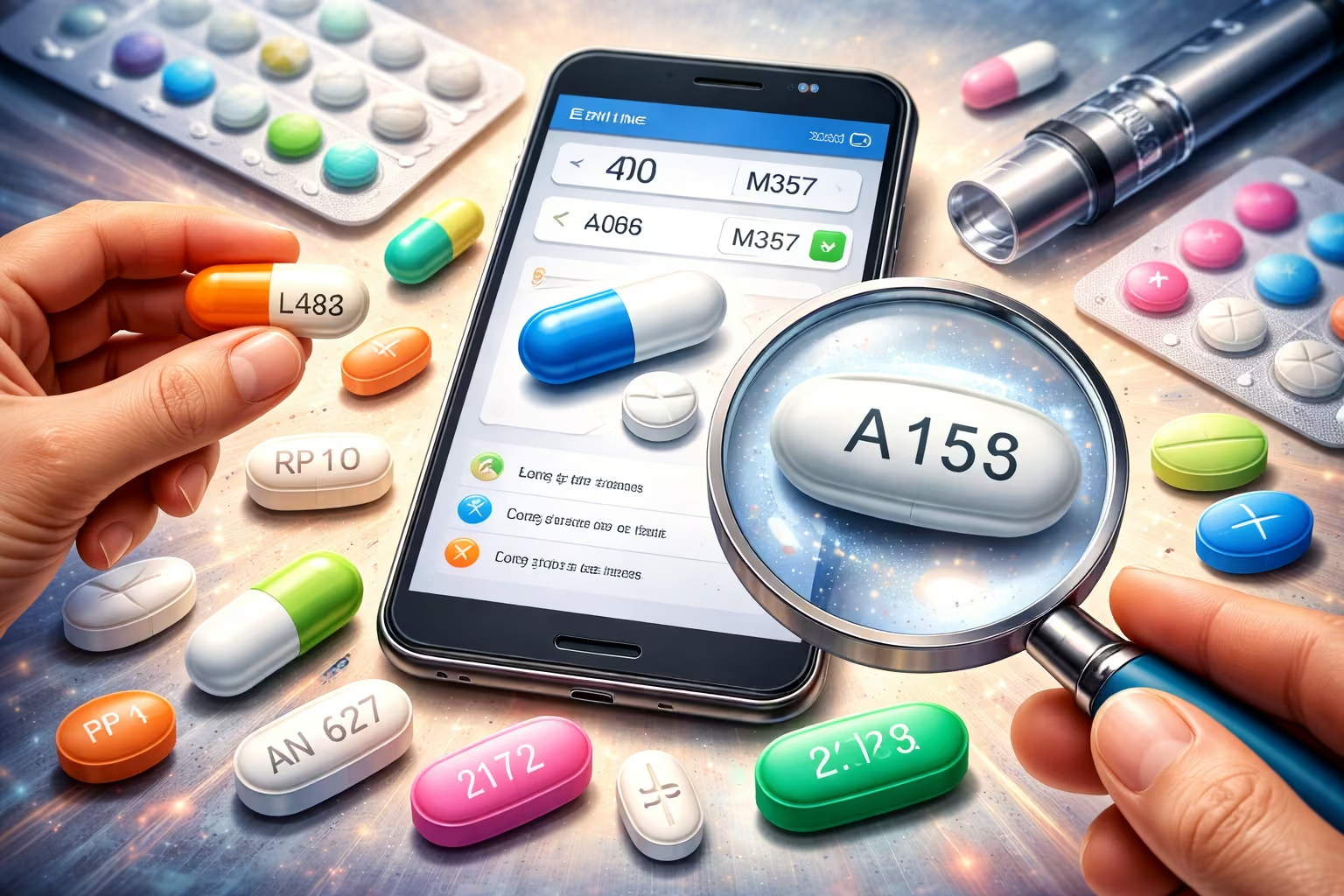
Finding a loose pill in your kitchen drawer or at the bottom of a bag can be scary. You might wonder if it is a simple aspirin or a strong prescription drug. Luckily, most tablets and capsules have a special "fingerprint" called an imprint code.
This guide helps you understand how to use a pill identifier by numbers and letters to stay safe.
Why Do Pills Have Numbers and Letters on Them?
The markings on your medication are not random. The Food and Drug Administration (FDA) in the United States requires nearly all solid oral medications to have a unique imprint. This rule helps doctors, nurses, and regular people know exactly what a drug is. It also helps prevent dangerous medication errors. These codes usually tell you the name of the drug and how strong the dose is.
What Does an Imprint Code Mean Exactly?
An imprint code is the mix of characters stamped or printed on a pill. This code is the key to any pill identifier by numbers and letters search. It acts like a social security number for the medication. For example, a pill might have "L484" on one side. When you put that into a drug identification tool free of charge, you find out it is Acetaminophen 500 mg.
How to Identify Pills by Imprint Code Step by Step?
If you find a pill and need to know what it is, follow these simple steps. Do not guess. Accuracy is the most important thing here.
- Look Closely at the Pill: Use a magnifying glass if you have one. Check both sides of the tablet.
- Find the Numbers and Letters: Write down exactly what you see. Some codes use only numbers. Others use a mix.
- Check the Shape: Is it round, oval, or square? The shape helps narrow down the search.
- Note the Color: Some pills are one solid color. Others might have two different colors on a capsule.
- Identify the Score Mark: A score mark is a line down the middle. It shows if the pill can be split in half safely.
- Use an Online Tool: Take all this info to a pill identifier tool online.
What if a Pill Has No Imprint?
Most legal drugs in the US and UK must have markings. If you find a pill with no numbers or letters, be very careful. It could be an illegal drug or a vitamin supplement. Sometimes, older medications or specific foreign drugs do not have codes. Never take a pill if you cannot identify it for sure.
How to Use a Pill Identifier by Numbers and Letters Safely?
Using a pill identifier numbers and letters search is a great first step. However, you should always double-check with a professional. A pharmacist is the best person to talk to. They have years of training. They can tell you if the pill is what the online tool says it is. You can also use a service like Medicine Finder Online to help track down details.
Common Imprint Codes and What They Represent
Many companies use specific letters for their brands. For instance, "M" often stands for Mallinckrodt. "V" might stand for Vintage Pharmaceuticals. Learning these patterns can help you get faster at a pill code lookup.
"The ability to identify a medication quickly can save a life in an emergency," says Dr. Jane Smith, a leading pharmacist.
Is Pill Identification Accurate?
Online databases are very good, but they are not perfect. In 2026, stats show that AI drug identifier tools have an accuracy rate of about 98%. That still leaves a small chance for a mistake. Lighting or a worn-down pill can make it hard to read the code correctly. Always treat the results as a guide rather than a final fact.
How to Identify Unknown Pills Safely at Home?
Safety is your number one goal. If you find a pill without packaging, do not touch it with your bare hands if you think it might be dangerous. Use a tissue or a glove. Place it in a clear plastic bag. Use your phone to scan pill with phone apps or take a clear photo. This helps when you show it to a doctor later.
The Role of Shape and Color in Identification
While the imprint code is the most important, the shape and color are big clues. A round white pill with "512" is different from an oval white pill with the same number. When you use a pill identifier by numbers and letters, the database will ask for these details to filter the results.
Can Two Pills Have the Same Imprint?
This is a common question. Legally, no two drugs from the same manufacturer can have the same code. However, two different companies might use a similar number for different things. This is why the color, shape, and size matter so much in your pill finder by code search.
What Do Numbers on Pills Mean for Dosage?
Often, the numbers relate to the strength. A pill with "20" might mean 20 milligrams. However, this is not always true. Some codes are just internal tracking numbers for the company. Never assume the number equals the dose without checking a medication identifier by imprint database.
Pill Identifier AI and Mobile Apps
In today's world, we have amazing tech. You can find a pill identification app android ios version easily. Some of these use your camera to recognize the drug instantly. These smart pill identifier tools are getting better every day. They compare your photo to thousands of images in an FDA drug database.
Identifying Medication by Numbers on Pill
- Clean the Pill: If it is dusty, wipe it gently so you can see the letters.
- Check the Edges: Some markings are very close to the edge.
- Use Good Light: Natural sunlight is best for seeing the true color.
- Don't Ignore Small Symbols: Sometimes there is a tiny logo instead of a letter.
How Pharmacists Identify Pills?
Pharmacists don't just use the internet. They have big books and professional databases. They also know the "look and feel" of most common drugs. If you are stuck, take the tablet to a local pharmacy. They can provide a safe medication identification guide for free.
The Difference Between OTC and Prescription Pills
Over the counter (OTC) drugs like ibuprofen also have imprints. Prescription drugs are usually tracked more closely. If you identify prescription drugs by imprint, make sure you check if it is a generic or brand name. Often, the markings will be different even if the medicine inside is the same.
Why Use Medicine Finder Online for Your Needs?
If you are looking for a reliable source, Medicine Finder Online provides updated info for many users.
Understanding the National Drug Code (NDC)
Every drug has a unique NDC number on its box. This is not the same as the imprint code. The NDC is for the whole package. The imprint is for the single pill. If you have the box, the NDC is the fastest way to identify the medicine.
Conclusion
Knowing how to use a pill identifier by numbers and letters is a vital skill. It helps you stay in control of your health. Whether you are checking an old bottle or a found tablet, always be thorough. Use reliable tools, check the physical traits, and always talk to a professional if you are unsure. Stay safe and keep your medications organized to avoid confusion.
Frequently Asked Questions
How do you identify a pill by imprint code?
You look at the letters and numbers on the pill and type them into an online database along with the color and shape.
What does an imprint code tell you?
It identifies the drug name, the manufacturer, and usually the strength of the medication.
Is it safe to identify pills online?
It is a good starting point, but you should always confirm the result with a healthcare professional or pharmacist.
What if the pill is broken and I can't read the code?
Do not try to guess. A partial code can lead to a wrong identification. Take the pieces to a pharmacist.
Can I use my phone camera to identify a pill?
Yes, many new apps allow you to take a photo to search the database, which is very helpful for those with poor eyesight.
Why do some pills have no markings?
These might be vitamins, herbal supplements, or illegal substances. Always treat unmarked pills as potentially dangerous.

Meet the Author
Dr. James Harrison, PharmD
Dr. James Harrison is a Doctor of Pharmacy and Senior Medical Content Specialist with over 17 years of experience in pharmacology, clinical research, and patient education.
He has worked with hospital pharmacy teams and healthcare research groups in the United States and Europe. His main focus is making complex medicine information simple, clear, and safe for everyday users.
Dr. Harrison writes helpful guides about medicine search, generic alternatives, active ingredients, salt composition, drug interactions, dosage forms, and safe medicine usage.
His writing style is simple and practical. Every article is created to help users understand medicines by brand name, generic name, salt name, or composition without confusion.
Areas of Expertise: Generic medicines, medicine composition, drug lookup systems, brand vs generic comparison, side effects, prescription vs OTC medicines, and safe medicine identification.
View All Articles by Dr. James HarrisonLeave a Review
Did this article help you understand your medicine better? Share your feedback with us. Your review helps us improve our content and create more useful medicine guides for readers.