Pediatric Dosage by Weight: A Safer Medicine Guide for Parents
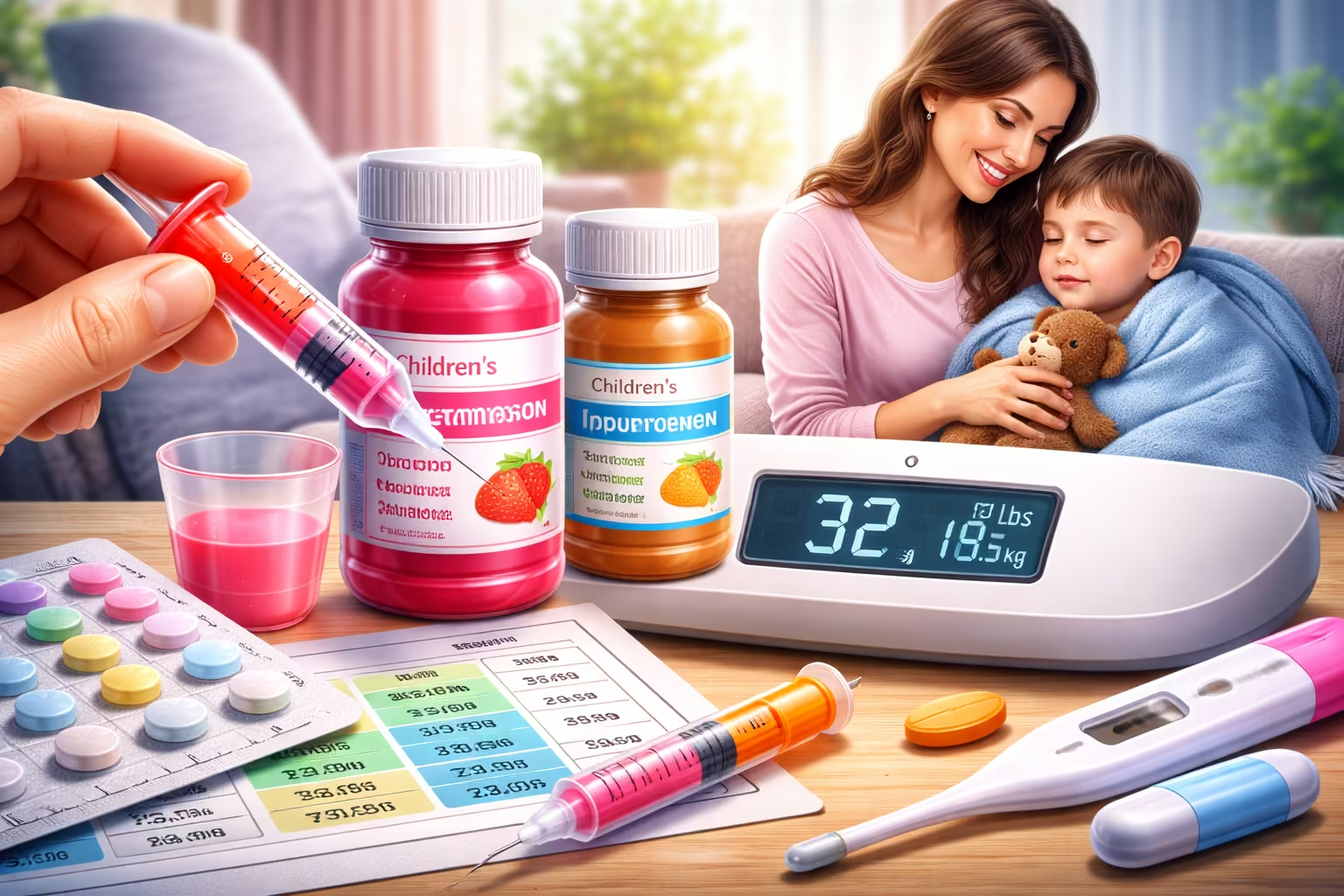
When your child wakes up with a warm forehead or a nagging cough, your first instinct is to help them feel better fast. You reach for the medicine cabinet, but then you pause. How much should you actually give? If you look at the back of a bottle, you might see a chart based on age. However, did you know that age is often the least accurate way to measure medicine for a little one?
In the world of pediatric care, weight is king. Every child grows at a different rate. Two five-year-olds can have vastly different body masses. This is why medical experts, including the World Health Organization (WHO) and the American Academy of Pediatrics (AAP), strongly push for weight-based dosing. Giving the right amount of medicine ensures it actually works while keeping your child safe from harmful side effects.
This guide will walk you through everything you need to know about pediatric dosage by weight. We will cover how to calculate the right amount, why the "mg per kg" rule matters, and how to avoid the most common mistakes parents make at 2 AM.
Why Weight Always Beats Age for Kids' Medicine?
Many parents wonder why age-based charts even exist if they aren't the best. Usually, they are there for a quick reference when a scale isn't handy. But for true safety, you should always use a child medicine dosage by weight approach.
Children have different metabolic rates than adults. Their livers and kidneys are still developing. Because of this, their bodies process drugs differently based on their actual body mass rather than how many birthdays they have had. A small child who is heavy for their age might need a bit more to see results, while a very lean older child might be at risk of an overdose if given a dose meant for their age group.
Recent 2026 health statistics show that nearly 25% of medication errors in homes happen because parents rely solely on age-based instructions. When you switch to a pediatric dose calculator by weight mindset, you cut that risk significantly.
The Science of mg/kg Dosing Explained
If you have ever looked at a prescription, you might have seen something like "15 mg/kg." This stands for milligrams per kilogram. It is the gold standard for pediatric pharmacology.
Basically, the doctor or the label is saying that for every kilogram (2.2 pounds) your child weighs, they should receive a specific amount of the active ingredient.
How to Calculate Child Dose by Weight Step by Step?
You do not need to be a math genius to get this right. Follow these simple steps to find the correct dosage for kids by weight:
- Get an accurate weight: Weigh your child in pounds or kilograms. If you use pounds, divide that number by 2.2 to get the weight in kilograms (kg).
- Find the mg/kg requirement: Look at the medicine label or ask your doctor for the "mg per kg dosing pediatric" instructions.
- Multiply: Multiply your child’s weight in kg by the required mg. (Example: 10 kg x 15 mg = 150 mg total).
- Check the concentration: Look at the bottle to see how many mg are in each ml (like 160 mg per 5 ml).
- Final Volume: Use a syringe to measure the exact liquid amount that matches the mg you calculated.
For a fast and easy check, you can use the Best Medicine Finder Online Tool to verify your numbers.
Children Dosage Chart by Weight for Common Medicines
Two of the most common medicines in any parent's toolkit are paracetamol (acetaminophen) and ibuprofen. Because these are used so often for fevers and pain, getting the dose right is vital.
Paracetamol Dosage Child Weight Guide
For paracetamol, the standard safe dose is usually 10 to 15 mg per kg. This can be given every 4 to 6 hours. Do not give more than five doses in a 24-hour window.
- 10-15 lbs (4.5-6.8 kg): Check with a doctor first.
- 16-23 lbs (7.2-10.4 kg): Roughly 3.75 ml of 160mg/5ml suspension.
- 24-35 lbs (10.9-15.9 kg): Roughly 5 ml of 160mg/5ml suspension.
Ibuprofen Dosage Chart for Kids
Ibuprofen is a bit different. It is usually dosed at 5 to 10 mg per kg every 6 to 8 hours. It is better for inflammation but should usually be given with a little food to protect the stomach.
- 12-17 lbs (5.4-7.7 kg): 2.5 ml of 100mg/5ml liquid.
- 18-23 lbs (8.2-10.4 kg): 4 ml of 100mg/5ml liquid.
- 24-35 lbs (10.9-15.9 kg): 5 ml of 100mg/5ml liquid.
"The right dose at the right time is the difference between relief and a trip to the emergency room." — Dr. Sarah Jenkins, Pediatric Safety Advocate.
Common Pediatric Dosing Mistakes Parents Make
Even with the best intentions, mistakes happen. Fatigue and stress are the biggest enemies of safety. Here are the most frequent errors reported in 2025 and 2026:
Using a Kitchen Spoon
Never use a teaspoon or tablespoon from your silverware drawer. These are not standard sizes. One kitchen spoon might hold twice as much liquid as another. Always use the dosing syringe or cup that comes with the medicine.
Confusing mg and ml
This is a dangerous one. "mg" is the weight of the medicine (the strength), while "ml" is the volume of the liquid. If you confuse these, you could give your child a massive overdose or a dose that does nothing at all.
Double Dosing
Sometimes, one parent gives a dose without telling the other. Or, you might give a "multi-symptom" cold medicine that already contains paracetamol, and then give a separate dose of paracetamol on top of it. Always read the active ingredients to avoid "hidden" double dosing.
Medication Safety Guidelines: Pro Tips
To keep your home safe, follow these expert-backed safe medication practices:
- Keep a log: Write down the time, the weight based dosing formula used, and the exact amount given. This prevents confusion between caregivers.
- Check the concentration: Companies sometimes change the strength of their liquid medicine. An "infant" version might be more concentrated than a "children's" version. Always look for the mg/ml ratio on the box.
- Store it high: Keep all medicines in a locked cabinet out of reach. Many liquid medicines are flavored like candy, which makes them a high pediatric toxicity risk if found by a curious toddler.
- Confirm with a pro: If you are unsure, call your pharmacist. They are experts in pediatric drug reference and can double-check your math in seconds.
For reliable information on various brands, check out the Best Medicine Finder Online Tool today.
Latest 2026 Stats on Medication Safety
Data from the start of 2026 shows a positive trend. Since more schools and clinics have started educating parents on weight-based prescription methods, home-based dosing errors have dropped by 12% compared to 2024.
However, the risk of underdose vs overdose remains a concern. About 15% of parents still under-dose their children because they are afraid of giving too much. While under-dosing is safer than an overdose, it means the fever doesn't break, and the child stays in pain longer than necessary.
Pediatric Dose Calculation Formula
If you want to do the math manually, here is the pediatric dosing formula explained simply:
[Child's Weight in kg] × [Recommended mg/kg] ÷ [Medicine Concentration (mg/ml)] = Your Dose in ml
Let's try it: If your child is 10 kg and needs 15 mg/kg of a medicine that is 160mg/5ml (which is 32mg per 1ml): 10 x 15 = 150 mg. 150 / 32 = 4.68 ml. You would round this to 4.7 ml on your syringe.
The Importance of Liquid Medicine Measurement
Measuring liquid is an art. When using a dosing syringe, always look at the plunger, not the liquid's curve (meniscus). Push the air bubbles out before you make your final measurement. Small bubbles can take up space and lead to an inaccurate dose, especially for very small infants where every drop counts.
If your child spits up the medicine immediately, talk to a doctor before giving another dose. You don't know how much was absorbed, and a second full dose could lead to an accidental overdose.
Final Words
Understanding pediatric dosage by weight is one of the best skills you can have as a parent. It takes the guesswork out of sick days and gives you the confidence that you are providing the best care possible.
Always keep an updated weight for your child on the fridge. Check the labels twice. And most importantly, never hesitate to ask a professional if something doesn't feel right. Your child's safety is worth that extra minute of double-checking.
FAQs
What is the most accurate way to dose my child?
Always use weight. Age is just an estimate, but weight tells you exactly how much body mass the medicine needs to treat.
Can I use my phone's pediatric dose calculator?
Yes, as long as you ensure you are entering the correct concentration (mg/ml) of the specific bottle you are holding.
Is paracetamol safe for a 10 kg child?
Generally, yes. A safe ibuprofen dose for child by weight or a paracetamol dose is calculated based on that 10 kg figure. For 10 kg, the typical paracetamol dose is 150 mg.
What should I do if I give too much medicine?
If you suspect an overdose, call your local poison control center or emergency services immediately. Do not wait for symptoms to appear.
Why is my infant's medicine more expensive and thicker?
Infant drops are often more concentrated so you can give a smaller volume to a baby who might struggle to swallow a lot of liquid. This is why you must never swap infant and children's versions without checking the label.

Meet the Author
Dr. James Harrison, PharmD
Dr. James Harrison is a Doctor of Pharmacy and Senior Medical Content Specialist with over 17 years of experience in pharmacology, clinical research, and patient education.
He has worked with hospital pharmacy teams and healthcare research groups in the United States and Europe. His main focus is making complex medicine information simple, clear, and safe for everyday users.
Dr. Harrison writes helpful guides about medicine search, generic alternatives, active ingredients, salt composition, drug interactions, dosage forms, and safe medicine usage.
His writing style is simple and practical. Every article is created to help users understand medicines by brand name, generic name, salt name, or composition without confusion.
Areas of Expertise: Generic medicines, medicine composition, drug lookup systems, brand vs generic comparison, side effects, prescription vs OTC medicines, and safe medicine identification.
View All Articles by Dr. James HarrisonLeave a Review
Did this article help you understand your medicine better? Share your feedback with us. Your review helps us improve our content and create more useful medicine guides for readers.