Is It Safe to Take Abortion Pills at Home? Full Guide
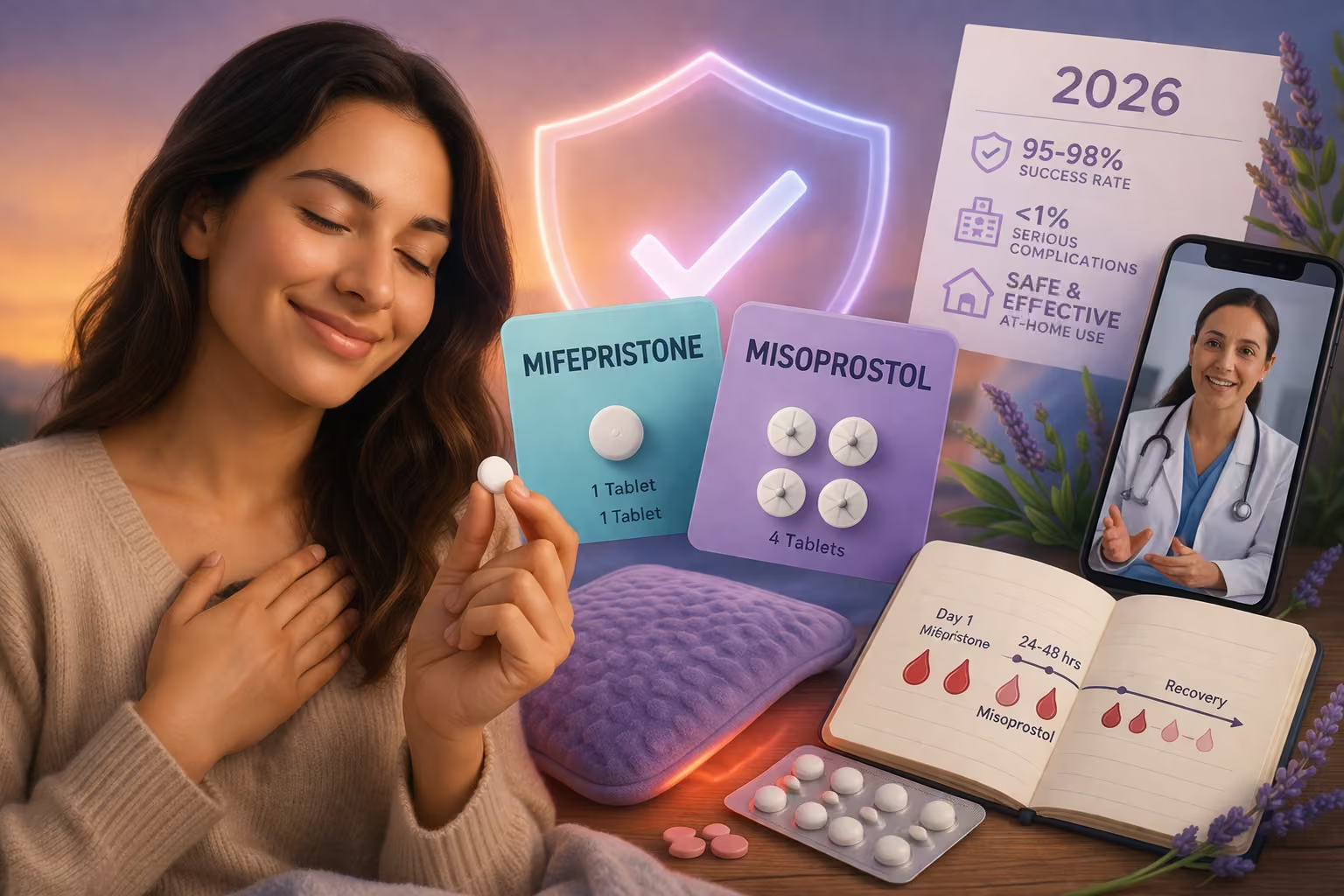
Many people find themselves asking a very important question when they face an unplanned pregnancy. Is it safe to take abortion pills at home? This guide looks at the facts, the latest 2026 stats, and what medical experts say about managing this process in a private space.
Deciding to end a pregnancy is a big step. Doing it at home can feel more comfortable and private. But you need the right information to stay healthy.
This full guide covers everything from how the pills work to when you should call for help.
What Are Abortion Pills?
Abortion pills are a mix of two different medicines. These are Mifepristone and Misoprostol. They work together to end an early pregnancy. Most doctors and groups like the World Health Organization (WHO) say they are very safe for most people.
How Abortion Pills Work?
The first pill is Mifepristone. It blocks a hormone called progesterone. Your body needs this hormone to stay pregnant. Without it, the uterine lining breaks down. This stops the pregnancy from growing.
The second part of the process uses Misoprostol. You usually take this 24 to 48 hours after the first pill. It causes the uterus to contract. This is like having a very heavy period or an early miscarriage. The tissue then leaves your body through the vagina.
Is It Safe to Take Abortion Pills at Home?
Yes, for most people, it is safe to take abortion pills at home. Medical studies show that a medical abortion at home has a very high success rate. In fact, many people prefer it because they can be in their own bed with people they trust.
According to 2025 and 2026 health reports, the abortion pill success rate is over 95% when taken within the first 10 weeks of pregnancy. The risks are very low, often lower than taking common over the counter pain meds.
"Access to safe abortion is a human right. When medication is used correctly, the home setting provides a dignified and safe environment for reproductive care." – Reproductive Health Journal 2026.
Latest 2026 Stats on Abortion Pill Safety
New data from early 2026 shows just how common and safe this method has become.
- Telehealth Growth: In the first half of 2025, about 27% of all abortions in the US happened via telehealth.
- Low Complication Rates: Less than 1% of people using pills at home need a hospital visit for a serious problem.
- Success by Week: At 8 weeks or less, the pills work about 94% to 98% of the time.
- Patient Satisfaction: Over 95% of users say that self-managing their abortion at home was the right choice for them.
The Step-by-Step Abortion Pill Process
If you are planning an at home abortion pill guide, you need to know the steps. Following the timing is key for the best results.
Before Taking Abortion Pill Checklist
Before you start, make sure you are ready.
- Confirm the pregnancy: Use a high quality test.
- Check the weeks: Most guides suggest using pills at home only if you are under 11 gestational weeks limit.
- Find a support person: Have a friend or partner nearby if possible.
- Stock up on supplies: Get heavy maxi pads, a heating pad, and easy to eat snacks.
- Medicine Finder Online: If you need to find where to get your medicine safely, you can check reputable sources.
Day 1: Mifepristone Dosage
You start by taking one 200mg Mifepristone tablet. You swallow this with water. Most people do not feel much after this pill. Some might have a little bit of nausea or light spotting, but it is not common.
Day 2 or 3: Misoprostol Dosage
After waiting 24 to 48 hours, you take the Misoprostol. The standard dose is four 200mcg tablets (800mcg total).
There are three ways to take these:
- Buccal: Place two pills in each cheek pouch for 30 minutes.
- Sublingual: Place the pills under your tongue for 30 minutes.
- Vaginal: Insert the pills deep into the vagina.
After 30 minutes, swallow whatever is left of the pills with water. This starts the uterine contraction process.
What to Expect After Taking Abortion Pills?
Once you take the Misoprostol, the process moves quickly. You will likely feel the first signs within 1 to 4 hours.
Abortion Pill Timeline Day by Day
- Hours 1-6: This is when the heaviest bleeding and cramping happen. You will pass blood clots and pregnancy tissue.
- Day 2-3: The bleeding slows down but stays like a period. You might feel tired.
- Week 1-2: You will likely have light bleeding or spotting.
- Week 4-6: Your next normal period should arrive.
Managing Abortion Pill Pain Level
The cramping severity can vary. Some say it feels like a very bad period. Others find it more intense. You can take Ibuprofen about 30 minutes before the Misoprostol to help with the pain. A heating pad on your belly is also a great tool for comfort.
Abortion Pill Side Effects
Like any medicine, there are side effects. These are normal and usually go away in a day or two.
- Nausea and vomiting
- Diarrhea
- Chills or a mild fever
- Dizziness
If these last more than 24 hours after taking the second pill, you should talk to a medical professional.
Risks of Abortion Pills and When They Are Unsafe
While abortion pill safety is high, it is not for everyone. There are specific times when you should not use this method.
Who Should Not Take Abortion Pills?
You should avoid the pill if:
- You have an IUD in place (it must be removed first).
- You have a known ectopic pregnancy (a pregnancy outside the uterus).
- You have certain bleeding disorders or take blood thinners.
- You have severe adrenal failure.
Ectopic Pregnancy Warning
The abortion pill does not treat an ectopic pregnancy. This is a medical emergency. If you have sharp pain on one side of your belly or feel like you might faint, seek help immediately.
Emergency Signs
Knowing the signs of abortion pill complications is vital for your safety. While rare, you must act fast if you see these symptoms.
- Heavy Bleeding: If you soak through two large maxi pads every hour for two hours in a row.
- High Fever: A fever of 100.4°F (38°C) or higher that starts a day after taking the second pill.
- Severe Pain: Pain that medicine like Ibuprofen does not help.
- Infection Symptoms: Bad smelling discharge or feeling very weak and sick.
- No Bleeding: If you do not bleed at all after 24 hours of taking Misoprostol, the pills might have failed.
Medical Abortion vs Surgical Abortion
Some people wonder which is better. It depends on your needs.
- Medical Abortion: Can be done earlier, feels more like a natural process, and happens in private.
- Surgical Abortion: Is done in a clinic, is very fast (usually 5-10 minutes), and you know the pregnancy is ended before you leave.
Both are safe, but the abortion pill is often the go-to for early pregnancy termination because of the convenience.
Recovering After Your Abortion
Taking care of yourself after the process is just as important as the steps themselves.
Aftercare Abortion Pill Tips
- Rest: Give your body at least a full day of rest.
- Hydrate: Drink plenty of water and juice.
- Watch for signs: Pay attention to how much you are bleeding.
- Emotional Effects: It is normal to feel many things. Some feel relief, while others feel sad. Both are okay. Talk to someone you trust.
How to Confirm Pregnancy Ended?
You should wait about 3 to 4 weeks before taking a home pregnancy test. If you take it too early, it might show a "false positive" because the hormones are still in your body. A follow up with a doctor or a blood test is the best way to be sure.
Is It Legal to Take Abortion Pills at Home?
The laws around abortion pills are changing fast in 2026. In many places, telehealth abortion pill safety is protected by "shield laws." These laws let doctors send pills by mail even to areas with restrictions.
Always check the local rules in your area. For many, Medicine Finder Online can be a helpful tool to find legitimate health information.
Conclusion
Taking abortion pills at home is a safe and effective way to manage your reproductive health in early pregnancy. By following the right timing and being aware of the warning signs, you can stay in control of your body. Always prioritize your health and reach out to medical professionals if you have any doubts about your recovery timeline.
FAQs
Are abortion pills safe for a first pregnancy?
Yes. There is no evidence that taking the pill for your first pregnancy causes any issues. It does not affect your future fertility.
How long does bleeding last after abortion pill?
Most people bleed for about one to two weeks. It starts heavy and gets lighter over time. Some might spot until their next period.
Can I take abortion pills alone at home safely?
While you can, it is better to have a trusted person with you. They can help if you feel dizzy or need a ride to a clinic.
What happens if the abortion pill fails?
If the pills do not end the pregnancy, you may need a second dose or a simple surgical procedure to finish the process.
Do abortion pills cause infertility?
No. Peer reviewed research shows that an uncomplicated medical abortion does not make it harder to get pregnant later.
How soon can I get pregnant after an abortion?
You can ovulate as soon as 1-3 weeks after the abortion. This means you can get pregnant almost immediately. If you don't want to get pregnant, start birth control right away.
Is medical abortion dangerous?
Statistically, it is safer than many common surgeries and even safer than giving birth. Complications are rare when the pills are used correctly.
Can I use the pill if I am 12 weeks pregnant?
Most home guides are for up to 10 or 11 weeks. After 12 weeks, the process is different and usually requires more medicine or a clinic visit.
What does the tissue look like?
In early pregnancy, you will mostly see blood clots. You might see a small sac, but it is often mixed with the heavy bleeding.

Meet the Author
Dr. James Harrison, PharmD
Dr. James Harrison is a Doctor of Pharmacy and Senior Medical Content Specialist with over 17 years of experience in pharmacology, clinical research, and patient education.
He has worked with hospital pharmacy teams and healthcare research groups in the United States and Europe. His main focus is making complex medicine information simple, clear, and safe for everyday users.
Dr. Harrison writes helpful guides about medicine search, generic alternatives, active ingredients, salt composition, drug interactions, dosage forms, and safe medicine usage.
His writing style is simple and practical. Every article is created to help users understand medicines by brand name, generic name, salt name, or composition without confusion.
Areas of Expertise: Generic medicines, medicine composition, drug lookup systems, brand vs generic comparison, side effects, prescription vs OTC medicines, and safe medicine identification.
View All Articles by Dr. James HarrisonLeave a Review
Did this article help you understand your medicine better? Share your feedback with us. Your review helps us improve our content and create more useful medicine guides for readers.