How to Store Medicines in Hot Weather Without Ruining Them?
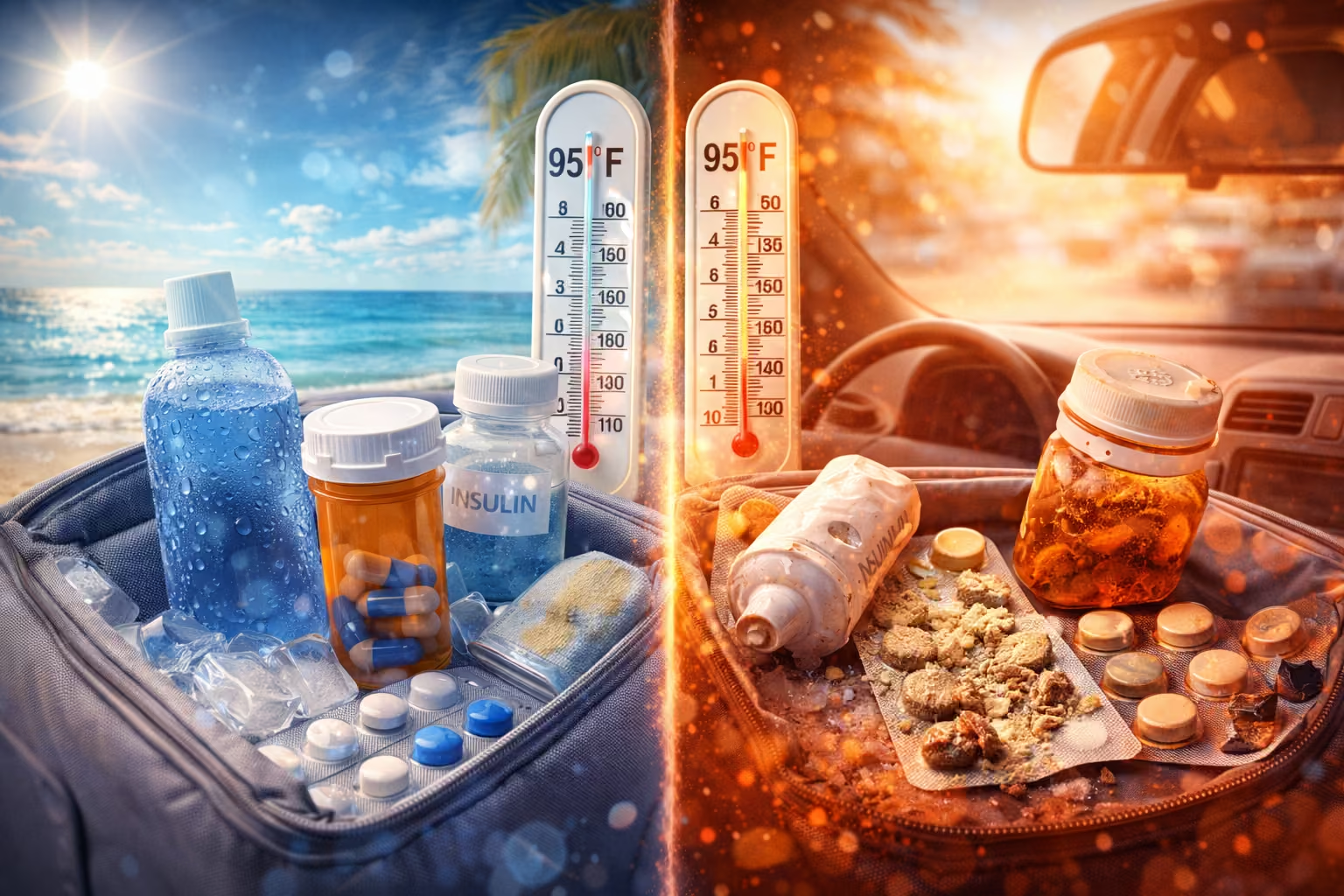
Summer is finally here, and while we all love a bit of sun, your medicine cabinet might be feeling the heat. Many of us forget that pills, syrups, and injections are quite picky about their environment. If you have ever wondered how to store medicines in hot weather, you are in the right place. Keeping your health supplies safe is not just about organization. It is about making sure they actually work when you need them.
In 2026, global temperatures are hitting new records. Recent health data shows that nearly 34% of people accidentally leave their prescriptions in places that are too warm. This is a big deal because a ruined pill is often a useless pill. We want to help you avoid that.
Why Does Summer Heat Mess with Your Meds?
When we talk about how to store medicine in summer heat, we have to look at science. Most drugs are made of chemicals that stay stable at specific temperatures. When things get too hot, those chemicals start to break down. This is called thermal degradation.
Think of it like an egg. When you crack an egg on a hot sidewalk, it changes from a liquid to a solid. It "cooks." Your medicine does something similar on a molecular level. You might not see it, but the active ingredients are falling apart. This potency loss means your 10mg dose might only act like a 2mg dose. Even worse, degradation can sometimes create new chemicals that irritate your stomach or cause side effects.
"Heat is the silent enemy of the pharmacy," says Dr. Elena Vance, a lead pharmaceutical researcher. "A single afternoon in a hot car can erase months of shelf life."
At What Temperature Do Medicines Go Bad?
Most experts agree on a specific medicine storage temperature range. For the majority of items, you want to stay between 68°F and 77°F (20°C to 25°C). This is what doctors call "controlled room temperature."
If the air around your pills hits 86°F (30°C) for a long time, you are entering the danger zone. High temperature sensitivity is common in:
- Hormonal drugs (like birth control or thyroid meds)
- Antibiotics (especially liquids)
- Heart medications
- Seizure treatments
In a 2026 study by the Global Health Institute, researchers found that some common tablets lost 15% of their strength after just 48 hours in 90-degree weather. That is why knowing what temperature ruins medicine is vital for your recovery.
How to Store Medicines in Hot Climate Areas?
If you live in a place where the sun never seems to quit, storing medicines in hot climate zones takes a bit of strategy. You cannot just leave them on the kitchen counter. Kitchens are actually one of the worst places because of the heat from the stove and toaster.
Instead, look for a "cool dry place" that stays steady. A low dresser drawer in a bedroom is often much better. Closets that are in the middle of the house, away from outside walls, also stay cooler.
One big tip is to use airtight containers. Humidity is the partner of heat. Together, they turn your crisp tablets into a sticky mess. If you see your blister packs looking puffy or the foil peeling, that is a bad sign.
Keeping Your Medicine Safe During a Heatwave
When a heatwave hits, your home might get warmer than usual. If you do not have air conditioning, you need a plan for how to store medicines during heatwave events.
- Use the "Basement Rule": Heat rises. The lowest floor of your home is usually the coolest.
- Avoid the Bathroom: People love the "medicine cabinet" over the sink, but the steam from your shower creates a tropical rainforest in there. This moisture ruins pills fast.
- Dark is Better: Keep bottles away from sunlight exposure. UV rays speed up the chemical breakdown.
For those wondering how to keep medicine cool without electricity, you can use an unglazed clay pot method. Placing a sealed container of medicine inside a larger clay pot filled with cool water can drop the internal temperature by several degrees through evaporation.
Dealing with Heat-Sensitive Drugs: Insulin and More
Some things are extra fragile. Insulin, vaccines, and biologics are high on the list. If you are looking into insulin storage in hot weather, remember that it must stay between 36°F and 46°F until you open it.
Once opened, insulin can usually stay at room temperature for about 28 days, but if your room is 95°F, it won't last that long. In these cases, you must use a specialized cooling wallet or a small insulated bag.
Antibiotic storage temperature is also tricky. Many liquid versions for kids must be in the fridge. If they sit out on a hot table for three hours, they might lose their ability to fight the infection. Always check your pharmacy recommendations on the label.
Traveling with Meds in the Summer
We all travel, but how to travel with medicine in hot weather? It is the number one way people ruin their supplies.
First rule: Never, ever put your meds in your checked luggage. Airplane cargo holds are not always temperature-controlled, and your bag might sit on a hot tarmac for hours. Keep them in your carry-on.
Second rule: No glove boxes. If it is 90°F outside, a parked car can reach 140°F in less than an hour. If you find your medicine left in car heat, you need to be very careful.
If you are on a road trip, use a small insulated cooler. But do not let the bottles touch the ice packs directly. That can freeze them, which is just as bad as cooking them. Wrap the bottles in a hand towel first.
Can You Tell If Your Medicine is Ruined?
Sometimes the damage is visible, but not always. You should look for:
- Color changes (pills turning yellow or brown)
- Changes in texture (tablets becoming soft, cracked, or crumbly)
- Smells (aspirin that smells like vinegar is a classic sign of rot)
- Capsules that are sticking together or melting
- Creams that have separated into oil and gunk
If you are asking, is it safe to take medicine stored in heat?, the answer is usually "ask your pharmacist." Taking a weakened blood pressure pill could lead to a stroke. Taking a ruined antibiotic could lead to a resistant infection. It is simply not worth the risk.
Smart Solutions for the Modern Patient
Finding the right info shouldn't be hard. The Best Medicine Finder Online Tool helps you locate the right supplies, but keeping them safe is your job.
Check out Medicine Finder Online for more tips on managing your prescriptions.
Summary Checklist for Summer Safety
- Check every label for medicine storage temperature.
- Move bottles out of the bathroom and kitchen.
- Keep a small thermometer near your storage area.
- Never leave bags in the car.
- Use insulated pouches for travel.
Staying healthy means making sure your tools are in top shape. By following these pharmacy storage guidelines temperature tips, you ensure that your recovery stays on track no matter how high the mercury rises.
2026 Global Storage Statistics
|
Medicine Type |
Sensitivity Level |
Max Safe Temp (Short term) |
|
Tablets |
Medium |
86°F (30°C) |
|
Liquids/Syrups |
High |
77°F (25°C) |
|
Injections/Insulin |
Extreme |
46°F (8°C) |
|
Eye Drops |
High |
77°F (25°C) |
Data compiled from the 2026 International Pharmaceutical Safety Report.
Maintaining the shelf life of your health supplies is a simple habit that saves lives. Don't let the summer sun take away your peace of mind. Keep it cool, keep it dry, and always keep it safe.
Frequently Asked Questions
Can heat destroy medicines?
Yes. High temperatures break down the chemical bonds in drugs. This makes them less effective or potentially harmful.
Should medicines be refrigerated in summer?
Only if the label says so. Most pills should actually stay at room temperature. Putting non-fridge meds in a damp refrigerator can cause moisture damage.
What happens if antibiotics get too hot?
They lose their power to kill bacteria. This means your sickness might get worse even if you are taking the "medicine."
Is it safe to use medicine left in a hot car?
It is risky. If the car was very hot, the medicine likely lost its potency. Consult a professional before using it.
How do you keep medicine cool while traveling?
Use an insulated bag or a cooling wallet. Keep the meds in the passenger area of the car where the AC is running.
What temperature should medicines be stored at?
Ideally between 68°F and 77°F for standard room-temperature items.

Meet the Author
Dr. James Harrison, PharmD
Dr. James Harrison is a Doctor of Pharmacy and Senior Medical Content Specialist with over 17 years of experience in pharmacology, clinical research, and patient education.
He has worked with hospital pharmacy teams and healthcare research groups in the United States and Europe. His main focus is making complex medicine information simple, clear, and safe for everyday users.
Dr. Harrison writes helpful guides about medicine search, generic alternatives, active ingredients, salt composition, drug interactions, dosage forms, and safe medicine usage.
His writing style is simple and practical. Every article is created to help users understand medicines by brand name, generic name, salt name, or composition without confusion.
Areas of Expertise: Generic medicines, medicine composition, drug lookup systems, brand vs generic comparison, side effects, prescription vs OTC medicines, and safe medicine identification.
View All Articles by Dr. James HarrisonLeave a Review
Did this article help you understand your medicine better? Share your feedback with us. Your review helps us improve our content and create more useful medicine guides for readers.