How to Read Medicine Labels? A Patient’s Guide
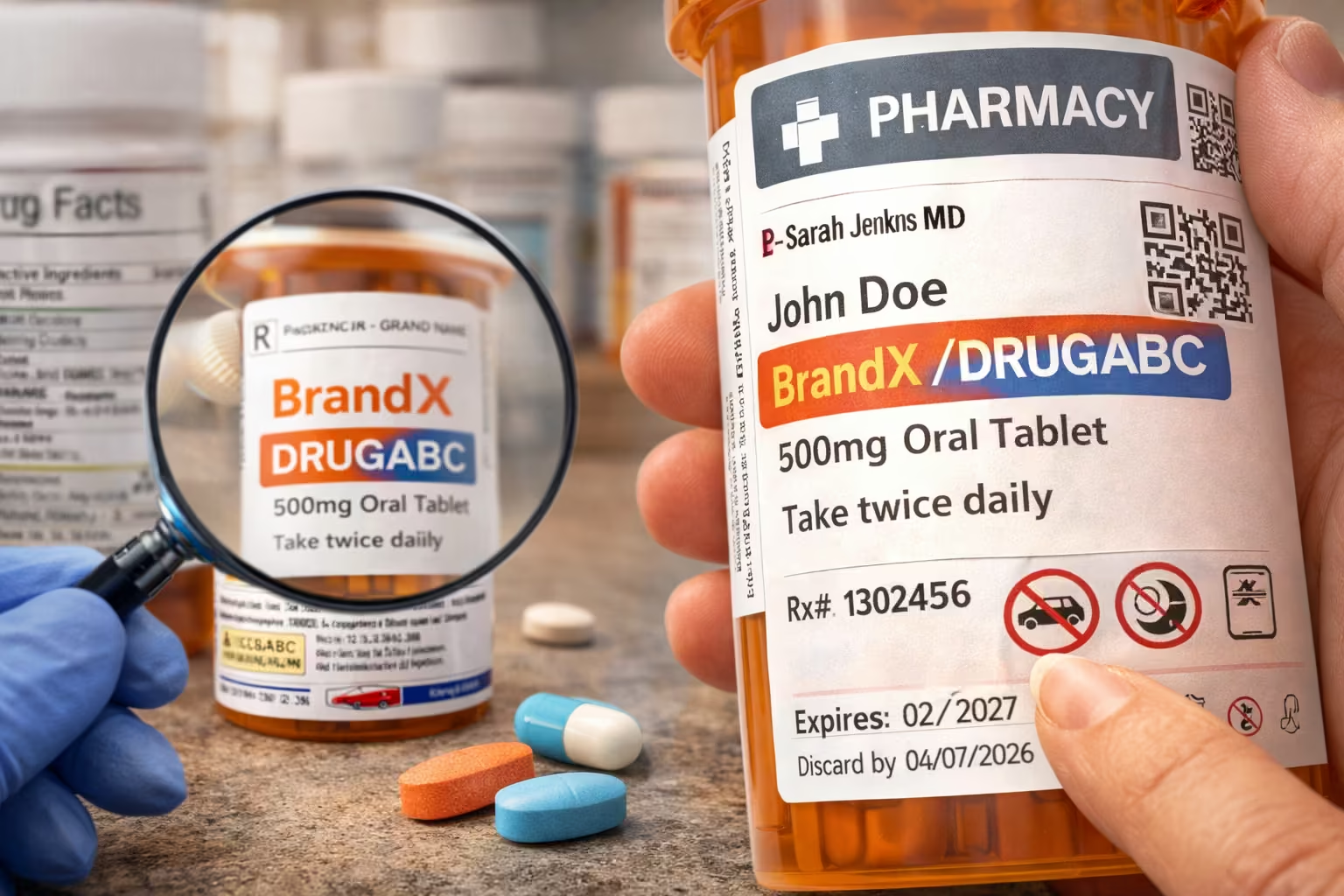
Taking care of your health starts with one simple habit. You must look at the small sticker on your pill bottle. Many people skip this step. They think they know what to do. But in 2026, medicine labels have changed to be safer. This guide helps you understand every word and symbol.
Why Learning How to Read Medicine Labels Matters Today?
In 2025 and 2026, health experts saw a rise in "at-home" errors. People often take the wrong amount of medicine because they find the text hard to read. A study from late 2025 showed that 40% of patients struggle to find the expiration date quickly.
"The label is the most important bridge between the doctor and the patient," says Dr. Sarah Jenkins, a leading safety expert. If you cross that bridge without looking, you might fall. Learning how to read medicine labels is a skill that saves lives. It prevents you from taking two drugs that do the same thing. It also stops you from taking something that might make you sleepy when you need to drive.
The Basic Parts of a Medicine Label
Every bottle has a story to tell. To hear it, you need to know where to look. Most labels are split into sections.
The Identity of the Drug
The first thing you see is the name. This might be a brand name like Tylenol. Or it might be the generic name like Acetaminophen. In 2026, the FDA updated label requirements to make the generic name just as big as the brand name. This helps you see exactly what is inside.
Drug Strength Explained
You will see numbers like 500mg or 10ml. This is the drug strength (mg, ml). It tells you how much power is in one pill or one spoonful. Never guess this. If the label says 250mg and your doctor told you to take 500mg, you need two pills.
The Prescription Number
On a bottle from a pharmacy, you will see a prescription number (Rx number). This is like an ID card for your medicine. If you lose the bottle, the pharmacy uses this number to find your files. It is also the key to getting a refill.
How to Read Prescription Labels Step by Step?
When a doctor gives you a specific medicine, the label is very detailed. It is not like a bottle you buy off the shelf.
- Check the Patient Name: Always make sure the patient name on prescription is yours. Families often mix up bottles in the cabinet. Taking someone else's heart medicine can be a disaster.
- Read the Medication Frequency Instructions: This tells you how often to take the dose. It might say "twice daily" or "every 8 hours." In 2026, many labels now use icons of a sun or moon to help people who speak different languages.
- Identify the Prescribing Doctor Details: This is the name of the person who wrote the order. If you feel sick after taking the pill, you know exactly who to call.
- Look for the Refill Information: This tells you how many times you can get a new bottle without calling the doctor again. If it says "0," you are on your last bottle.
For the best prices on your monthly needs, check out Medicine Finder Online to compare local costs.
Medicine Label Meaning Explained: OTC vs Prescription
There are two main types of medicine. Over-the-counter (OTC) drugs are the ones you buy at the store. Prescription drugs are the ones a pharmacist gives you.
The OTC Drug Facts Panel
The OTC medicine label guide always starts with the "Drug Facts" box. This box is required by law. It must have a specific order so you don't get confused.
- Active Ingredients: This is the chemical that fixes your problem.
- Purpose: This tells you what the drug does, like "Pain Reliever."
- Uses: This lists the symptoms the drug treats.
- Warnings: This is the most vital part for your safety.
The Prescription Label Guide
A prescription label guide focuses more on your personal instructions. It includes the pharmacy information like their phone number. It also shows the route of administration. This is a fancy way of saying how the medicine enters your body. Does it go in your mouth? Or is it a cream for your skin?
Decoding Active and Inactive Ingredients
Every medicine is a mix of different things.
Active Ingredients
These are the stars of the show. They do the work. If you take a pill for a headache, the active ingredients are what stop the pain. In 2026, new laws require these to be listed at the very top in bold letters.
Inactive Ingredients
These are the supporting actors. They might be colors, flavors, or the stuff that holds the pill together. While they don't fight the illness, they matter. If you have an allergy to red dye, you must check the inactive ingredients list.
Understanding Medication Instructions and Safety
Safety is about more than just the dose. It is about how you live while taking the drug.
Medication Warnings
This section tells you what to avoid. It might say "Do not drink alcohol" or "Avoid sunlight." These are called medication warnings. Ignoring them can make you very sick. Some drugs have contraindications. This means you should not take the drug if you have a certain condition, like high blood pressure.
Storage Instructions
Where do you keep your medicine? Most people use the bathroom cabinet. But the bathroom is often too humid. Storage instructions usually suggest a "cool, dry place." In 2026, some new biologics need to be kept in the fridge. Always check if your bottle needs to stay cold.
Medication Safety Guidelines
Always use the tool that comes with the medicine. If you have a liquid, use the plastic cup or syringe in the box. A kitchen spoon is never the right size. Following medication safety guidelines means being exact.
How to Understand Drug Labels in 2026?
The world of medicine moves fast. By 2026, we have seen some big changes in how labels look.
Medicine Label Symbols Meaning
Symbols are now used to save space. A picture of a car with a red line through it means "Do not drive." A picture of a pregnant woman with a cross means "Not safe during pregnancy." These medicine label symbols meaning are now standardized across the US and UK.
Expiration Date and Discard Dates
A drug is not good forever. The expiration date is when the chemicals start to break down. After this date, the pill might not work. Or worse, it could become toxic. Never keep old medicine "just in case."
Prescription Label Changes 2026
One big change this year is the use of QR codes. You can scan the label with your phone to hear the instructions read aloud. This is great for people who have trouble seeing small text. This is a key part of FDA updated label requirements.
Parts of a Medicine Label
Imagine your medicine bottle is a map.
Knowing the parts of a medicine label helps you find facts in a second. You should not have to hunt for the dose when you have a fever.
Medicine Safety Tips 2026: The "Triple Check" Rule
To stay safe, use the triple check rule every time you take a pill.
"Safety is a choice you make every day," says a 2026 health report. Small mistakes lead to big problems.
Updated OTC Drug Facts Label
The updated OTC drug facts label now includes a section for "Allergy Alerts." This is a big win for patient safety. It highlights common allergens like gluten or soy right at the start. If you are ever unsure about a generic brand, Medicine Finder Online can help you verify the manufacturer details.
Medication Safety Awareness
If you have children or pets, your job is even bigger. Kids are small, so a tiny mistake in the dose is a huge deal for their bodies. Always look for the "Children's" label on OTC drugs. Never give a child an adult dose unless a doctor says so.
Why You Should Never Share Meds?
Even if your friend has the same cough, do not share your pills. Your bodies are different. Your friend might have a condition that makes your medicine dangerous for them. Sharing is not caring when it comes to prescriptions.
Final Thoughts on Medication Literacy
Reading a label is a form of literacy. It is about understanding the language of your health. When you know how to understand drug labels, you take control. You are no longer just a patient. You are a smart health consumer.
Take a moment today to look through your cabinet. Check for the expiration date on every bottle. If it is past the date, throw it away safely. Your future self will thank you for being careful.
Conclusion
Staying safe with medicine is not hard. It just takes a little bit of time. By following this prescription label guide, you can avoid the most common errors. Always read the active ingredients. Pay attention to the medication warnings. And never be afraid to ask your pharmacist a question. They are there to help you.
FAQs
What should I do if the label is torn or missing?
If you cannot read the label, do not take the medicine. Take the bottle back to your pharmacy. They can print a new label for you. It is never safe to guess what is inside a mystery bottle.
Is the "Discard Date" the same as the "Expiration Date"?
The discard date is often set by the pharmacist. It is usually one year after they gave you the bottle. The expiration date is set by the company that made the drug. You should follow whichever date comes first.
Can I take medicine if it is one month past the expiration date?
No. While some drugs just lose power, others can change into something harmful. It is not worth the risk. Dispose of it at a local drug take-back site.
Why are inactive ingredients listed?
They are listed for people with allergies. Some people react to certain dyes or preservatives. Even if they don't treat your illness, they can affect your body.
What does "take on an empty stomach" really mean?
It usually means you should take the medicine one hour before you eat. Or you can wait two hours after you eat. This helps the medicine soak into your body better.
What is an Rx number?
The Rx number is the unique code for your specific prescription. It helps the pharmacy track your medication history and process refills quickly.
How do I read a medicine label if the font is too small?
In 2026, many pharmacies offer large-print labels upon request. You can also use a magnifying glass or a phone app that zooms in and reads the text for you.
What are contraindications on a drug label?
These are specific situations or health conditions where you should not use the drug. For example, a label might say "do not use if you have kidney disease."
Where can I find more information about my medication?
You can always talk to your pharmacist or doctor. You can also check the official website of the drug manufacturer or use trusted sources like the FDA or Medicine Finder Online.

Meet the Author
Dr. James Harrison, PharmD
Dr. James Harrison is a Doctor of Pharmacy and Senior Medical Content Specialist with over 17 years of experience in pharmacology, clinical research, and patient education.
He has worked with hospital pharmacy teams and healthcare research groups in the United States and Europe. His main focus is making complex medicine information simple, clear, and safe for everyday users.
Dr. Harrison writes helpful guides about medicine search, generic alternatives, active ingredients, salt composition, drug interactions, dosage forms, and safe medicine usage.
His writing style is simple and practical. Every article is created to help users understand medicines by brand name, generic name, salt name, or composition without confusion.
Areas of Expertise: Generic medicines, medicine composition, drug lookup systems, brand vs generic comparison, side effects, prescription vs OTC medicines, and safe medicine identification.
View All Articles by Dr. James HarrisonLeave a Review
Did this article help you understand your medicine better? Share your feedback with us. Your review helps us improve our content and create more useful medicine guides for readers.