Generic vs Brand Medicine: What’s the Difference & Which Is Better?
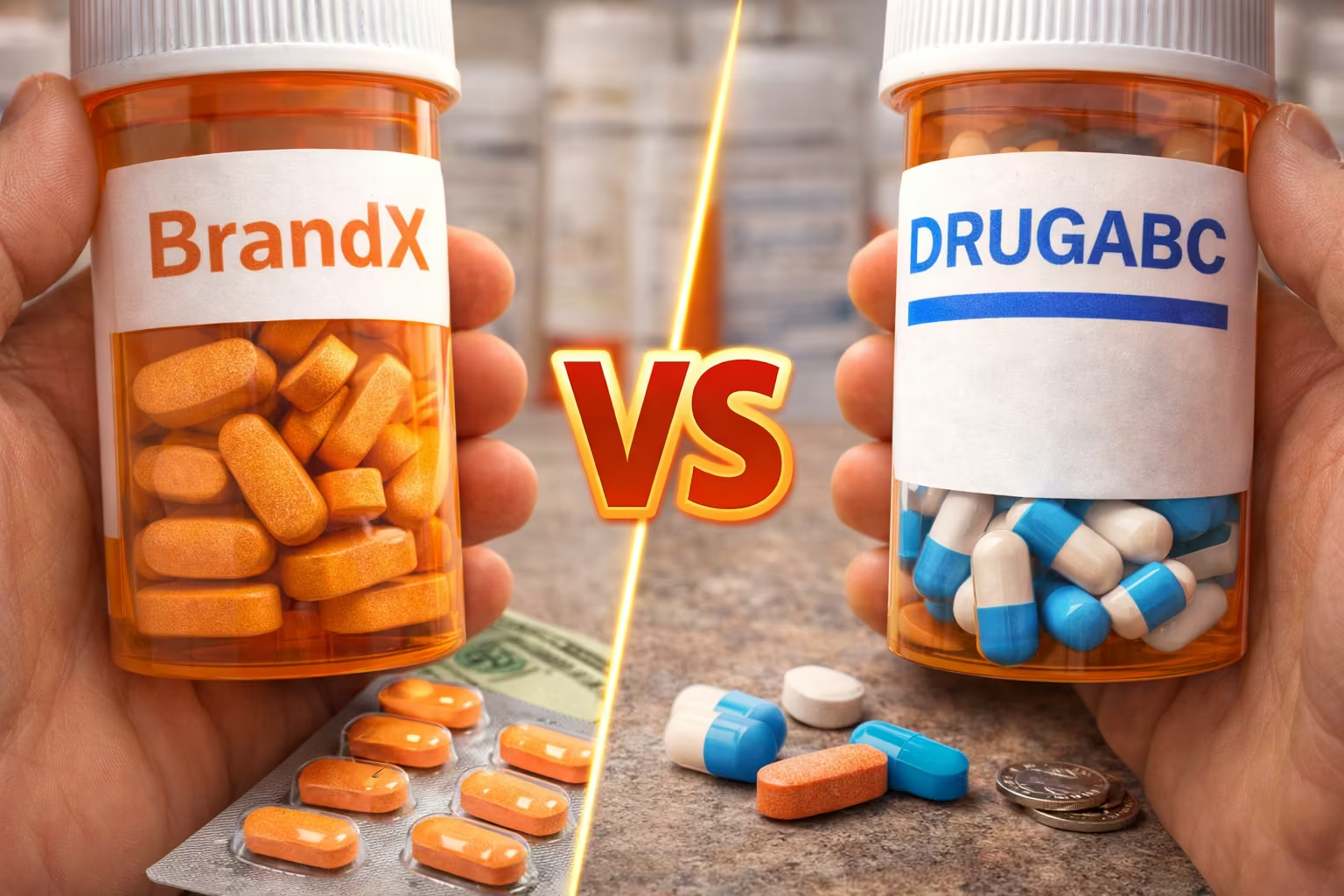
Have you ever stood at the pharmacy counter feeling a bit stumped? Your pharmacist asks if you want the generic version or the brand name. One costs the price of a fancy dinner, while the other costs less than a cup of coffee. You wonder if the cheap one actually works. Is it a knockoff? Does it have the same punch? These are the questions millions of people ask every single day.
In this 2026 updated guide, we are going to pull back the curtain. We will look at why these pills look different but act the same. We will explore the strict rules that keep you safe. Most importantly, we will help you decide which choice is right for your health and your wallet.
What Exactly Is a Brand Name Drug?
When a drug company finds a new way to treat a sickness, they start from scratch. They spend years in labs. They run thousands of tests. This process is very expensive. To protect their hard work, the government gives them a patent. This is like a "keep out" sign for other companies.
During this time, the company gives the drug a catchy brand name. Think of names like Advil or Lipitor. For about 20 years, they are the only ones allowed to sell it. They use this time to make back the money they spent on research and big TV ads. This is known as the brand exclusivity period.
What Is a Generic Medicine?
Once that "keep out" sign or patent expires, the secret recipe becomes public. Other companies can now step in. They create what we call generic drugs. A generic drug is a medication made to be the same as a brand name drug already on the market.
It has the same strength. It is taken the same way. It is intended to do the same job. If the brand name is a fancy designer shirt, the generic is the same shirt made with the same fabric but without the logo. It does the exact same thing: it keeps you dressed.
Generic vs Brand Medicine: The Key Differences
If they are the same, why do they look so different? This is where many people get confused. Under the law, a generic cannot look exactly like the original. It cannot be the same color or shape. This is mostly for trademark reasons.
The real difference lies in the ingredients. Every pill has two parts. First, there is the active ingredient. This is the chemical that actually fights the disease. Second, there are inactive ingredients. These are things like fillers, binders, and dyes that hold the pill together or give it a flavor.
While the active part must be identical, the inactive parts can vary. This is why a generic might taste slightly different or have a different coating. For 99% of people, these small changes mean nothing.
Are Generic Medicines Safe for You?
The short answer is a big yes. You might worry that "cheap" means "low quality." In the world of medicine, that is not how it works. In the United States, the Food and Drug Administration (FDA) is the watchdog.
For a generic to hit the shelf, it must be FDA approved. The agency has a very tough checklist. They check the factory. They check the ingredients. They make sure the company follows the same medication safety standards as the big brands.
As of early 2026, data shows that nearly 9 out of 10 prescriptions filled in the U.S. are for generics. If they weren't safe, our hospitals would be full of people with failed treatments. Instead, people are getting better and saving money.
The Science of Bioequivalence
When scientists talk about if a generic is as good as a brand, they use a big word: bioequivalence. This sounds scary, but it’s simple. It means the generic drug must get into your blood at the same speed and in the same amount as the brand name drug.
The FDA allows a very tiny bit of wiggle room, usually around 3% to 4%. However, this is the same tiny variation you find between two different batches of the brand name drug itself. No two pills are 100% perfect copies, but they are close enough that your body cannot tell the difference. This is why is generic medicine as good as brand is a question with a confident "yes" from the medical community.
"The goal of a generic is to provide the same therapeutic effect without the unnecessary price tag," says Dr. Sarah Jenkins, a leading clinical researcher.
Why Are Generic Drugs Cheaper?
This is the million-dollar question. If they do the same thing, why is the price gap so huge? It isn't because the ingredients are worse. It's because the generic makers didn't have to "invent the wheel."
They didn't pay for 10 years of clinical trials. They don't buy expensive Super Bowl ads. They don't hire thousands of sales reps to visit doctors. They simply follow the recipe that has already been proven to work.
When multiple companies start making the same generic, they compete. They lower their prices to get you to buy theirs. This competition is great for your bank account. In 2026, the average generic vs brand medication cost shows that generics can be 80% to 85% cheaper.
Comparing Effectiveness: Generic vs Brand Drugs
Does the cheap pill actually heal you? Most studies say yes. Researchers have looked at thousands of patients taking heart medicine, depression pills, and even antibiotics. They compared those on brand names to those on generics.
The results are almost always the same. The generic medicine effectiveness matches the brand name. The success rates are equal. The side effects are usually the same because the active chemicals are the same.
However, there is a small group of drugs called "narrow therapeutic index" drugs. These are medicines where even a tiny change in the dose can be a big deal, like some seizure or thyroid meds. In these rare cases, your doctor might want you to stick to one specific version. For everything else, the generic is a twin.
The Role of the FDA and Latest 2026 Guidelines
The rules for medicine are always changing to keep up with new science. In 2026, the FDA released updated healthcare pricing and safety guidelines. These rules make it even harder for "fake" or "bad" generics to enter the market.
Every company must prove pharmaceutical equivalence. This means they must show their pill has the same amount of active ingredient. They also must show therapeutic equivalence, meaning it will treat the disease the same way.
The 2026 FDA latest guidelines also focus on onshoring. This means they are encouraging more companies to make drugs right here in the U.S. to avoid supply chain issues. This helps ensure that your generic drug safety update is always top-notch.
Insurance Coverage and Pharmacy Rules
If you have health insurance, your company likely loves generics. Most plans have "tiers." A generic might cost you a $5 co-pay, while a brand name might cost $50 or more.
Many states also have prescription substitution laws. This means if your doctor writes a prescription for a brand name, the pharmacist can automatically give you the generic unless the doctor writes "Dispense as Written." This is designed to save you money automatically.
Always check your local pharmacy substitution rules or ask your pharmacist. They are there to help you find the best value.
For the most reliable way to locate your prescriptions at the best prices, you should check out Medicine Finder Online.
Breaking Down the FDA Approval Process
How does a generic get the green light? It’s not just a simple application. It’s a mountain of paperwork called an Abbreviated New Drug Application (ANDA).
- The Recipe Check: They must use the same active ingredients.
- The Strength Test: It must be the same dose (e.g., 20mg).
- The Lab Work: They must prove the drug dissolves and enters the blood correctly (pharmacokinetics).
- The Factory Inspection: The FDA sends people to the factory to make sure it is clean and organized.
This process ensures that a brand name drug vs generic equivalent is a fair and safe trade.
Inactive Ingredients: Should You Care?
As we mentioned, the fillers can be different. While the medicine is the same, the "glue" holding it together might be different. This matters only if you have a very specific allergy.
For example, one brand might use lactose as a filler, while a generic uses cornstarch. If you have a severe allergy, you should always check the label. Most people will never notice a difference. If you feel "weird" after switching, it might be the inactive ingredients, and you should talk to your doctor.
The Impact of Generics on Healthcare
The numbers for 2026 are staggering. The use of generic drugs saved the global healthcare system over $400 billion last year. Without generics, many people simply could not afford to stay healthy.
- 92% of all prescriptions are now filled with generics.
- Savings: Patients save an average of $50 per prescription by switching.
- Access: Generics have made life-saving treatments available in parts of the world that previously had no access.
These cost comparison 2026 figures prove that generics are the backbone of modern medicine.
How to Choose: Generic or Brand?
So, which is better? For most of us, the generic is the winner. It gives you the same health benefits for a fraction of the price. It is safe, tested, and approved.
If you are worried, ask your doctor these three questions:
- Is there a generic version of this medicine?
- Is it a narrow therapeutic index drug?
- Are there any inactive ingredients I should know about?
Most of the time, your doctor will be happy to help you save money.
Finding Your Meds Made Easy
Finding the right medicine shouldn't be a headache or break the bank. You deserve clear information and easy access to your health needs.
Medicine Finder Online is your go-to partner for navigating the complex world of prescriptions and costs.
Conclusion
The debate between Generic vs Brand Medicine usually ends in a tie for health but a win for your wallet. Generics are not "fakes." They are scientifically proven copies that follow the same rules as the originals. They use the same active ingredients to produce the same results.
In a world where healthcare costs are rising, choosing a generic is one of the smartest things you can do for your family. You aren't sacrificing quality; you are just skipping the bill for the fancy box and the TV commercials. Always talk to your healthcare provider, but remember that the "cheap" pill is often just as mighty as the expensive one.
FAQs
Are generic medicines safe to take?
Yes, they are very safe. They must pass the same FDA quality and safety tests as brand name drugs. They are made in the same types of factories and use the same active chemicals.
Why is there such a big difference between generic and brand medicine prices?
Generic makers don't have the massive costs of research, development, and advertising. They wait for the patent to end and then make the medicine using a proven recipe, allowing them to sell it for much less.
Is the effectiveness of generic medicine the same as the brand version?
Yes. To be approved, a generic must be bioequivalent. This means it works in the body the same way and provides the same clinical benefits as the original drug.
Do generic drugs have the same side effects?
Since the active ingredients are identical, the side effects are usually the same. However, because the inactive ingredients (like dyes or fillers) can differ, a person might rarely have a different reaction to those specific components.
Can my pharmacist switch me to a generic without asking?
In many places, yes. Pharmacy laws often allow or even require pharmacists to give you the generic version to help you save money, unless your doctor specifically says not to.
Will my insurance cover brand name drugs if a generic is available?
Most insurance plans prefer generics. If you choose a brand name when a generic is available, you might have to pay a much higher co-pay or even the full price difference yourself.
How can I tell if a drug is a generic?
Generics are usually named after their chemical ingredient (like Ibuprofen), whereas brands have unique, trademarked names (like Advil). The packaging for generics is also usually simpler.

Meet the Author
Dr. James Harrison, PharmD
Dr. James Harrison is a Doctor of Pharmacy and Senior Medical Content Specialist with over 17 years of experience in pharmacology, clinical research, and patient education.
He has worked with hospital pharmacy teams and healthcare research groups in the United States and Europe. His main focus is making complex medicine information simple, clear, and safe for everyday users.
Dr. Harrison writes helpful guides about medicine search, generic alternatives, active ingredients, salt composition, drug interactions, dosage forms, and safe medicine usage.
His writing style is simple and practical. Every article is created to help users understand medicines by brand name, generic name, salt name, or composition without confusion.
Areas of Expertise: Generic medicines, medicine composition, drug lookup systems, brand vs generic comparison, side effects, prescription vs OTC medicines, and safe medicine identification.
View All Articles by Dr. James HarrisonLeave a Review
Did this article help you understand your medicine better? Share your feedback with us. Your review helps us improve our content and create more useful medicine guides for readers.