Can’t Identify a Pill? 7 Safe Things to Do Right Away
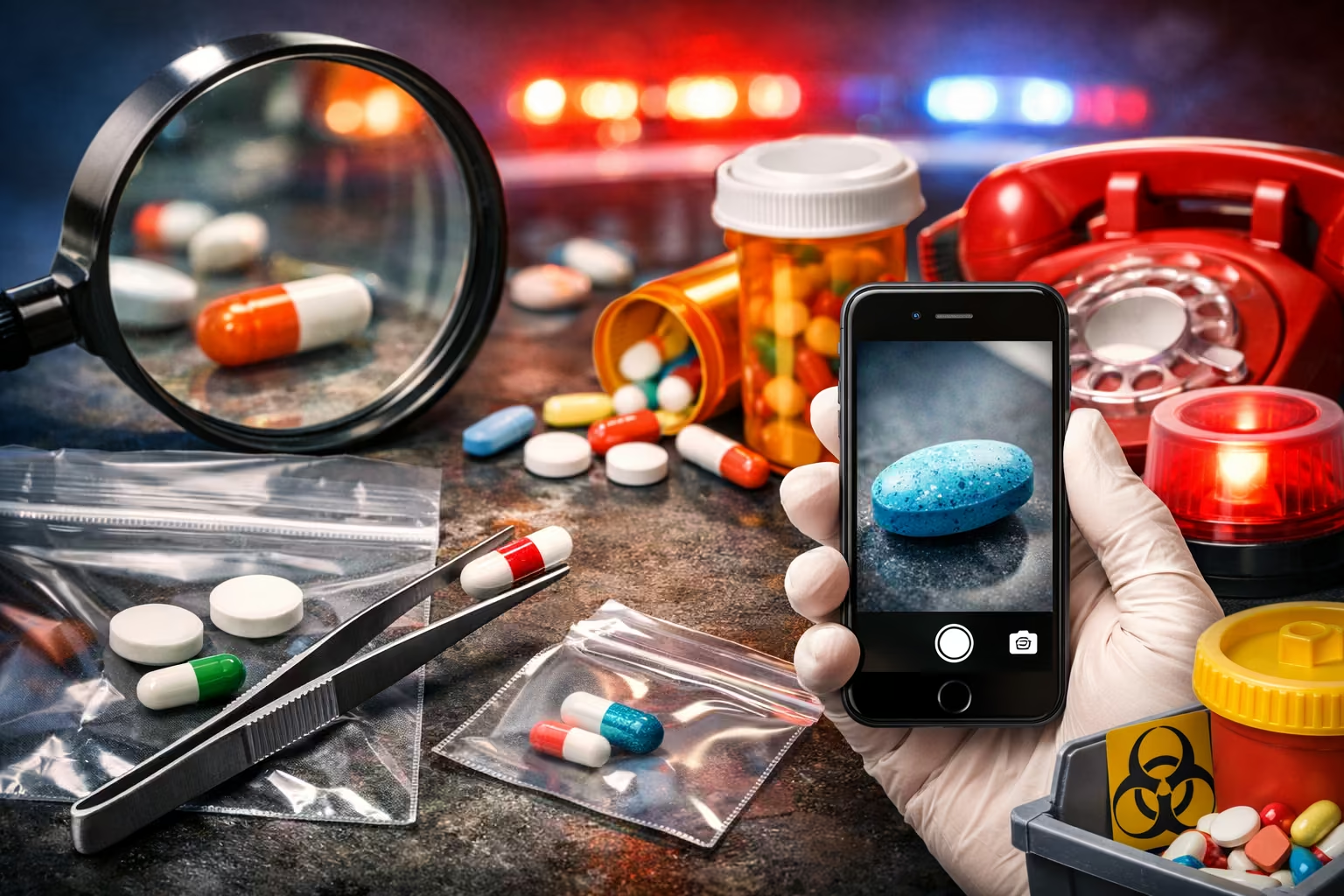
Finding a stray tablet on the floor or a loose capsule in an old jacket pocket happens to the best of us. Maybe you spilled your weekly organizer. Perhaps you found a mystery pill in a child’s play area. Whatever the case, your first instinct might be to guess what it is based on memory. Stop right there. If you can’t identify a pill, taking it or even handling it carelessly can lead to a medical crisis.
In the United States alone, medication errors cause at least one death every single day and injure approximately 1.3 million people annually according to latest health safety reports. As we move into 2026, the complexity of synthetic drugs makes visual guessing even more dangerous.
This guide will walk you through the exact, life-saving steps you need to take when you encounter unknown medication.
1. Do Not Taste, Touch, or Swallow the Mystery Item
The most vital rule when you can’t identify a pill is to keep it away from your mouth. Some people think they can lick a pill to see if it tastes like a common aspirin or a vitamin. This is a huge mistake. Many modern drugs are designed with special coatings. Some are extremely potent even in tiny amounts. If you find an unknown pill what is it concerns should never lead to a "taste test."
Chemicals in some medications can be absorbed through the skin or mucous membranes. If the pill is crumbling or has powder on it, avoid breathing in that dust. Use a pair of tweezers or a tissue to pick it up. Place it immediately into a clean, clear plastic bag or a small glass jar. Seal it tight. This keeps children and pets safe while you figure out the next steps. Safety always comes before curiosity when dealing with mystery substances.
2. Check for a Pill Imprint Code Immediately
Almost every legitimate tablet or capsule made today has a unique marking. This is called a pill imprint code. It might be a string of numbers, letters, or a company logo. This code is your best friend when you need to identify a pill safely. Manufacturers use these marks to distinguish their products from others. It is like a fingerprint for medicine.
If the pill is tiny, use a magnifying glass or take a high-resolution photo with your smartphone. Zoom in to see the characters clearly. If the pill has no markings at all, it could be an herbal supplement, an illegal substance, or a very old medication where the mark has worn off. Knowing how to check pill identity starts with finding these digits. If you have the code, you are halfway to an answer. Remember that medicine identification emergency situations require accuracy, so double-check every letter and number you see.
3. Look at the Physical Traits Like Color and Shape
While the imprint is the most reliable factor, other physical clues help narrow things down. Note the color. Is it a solid color or speckled? Is it a capsule with two different colored halves? Look at the shape too. Is it round, oval, triangular, or shield-shaped? These details are part of any professional pill identification guide used by experts.
Is the pill scored? A "scored" pill has a line indented across the middle. This usually means the pill can be split into two equal doses. However, never assume a round white pill with a score is just a common painkiller. Hundreds of high-potency heart meds and psychotropic drugs look exactly like generic over-the-counter tablets. If you find mystery medication, treat it as a high-risk item regardless of how "friendly" or "common" it looks.
4. Use Reliable Free Pill Identifier Tools Online
The internet offers powerful databases to help you solve the mystery. You can search by the imprint, color, and shape. Using a pill imprint lookup tool is a fast way to get results from home. Many of these sites pull data directly from the FDA drug database to ensure you get the right name and dosage.
One of the most trusted resources for this task is Medicine Finder Online which helps people verify their medications quickly and accurately. When using these tools, be very specific. If you see a "B" that looks like an "8," try searching both ways. These digital tools are excellent for how to identify medication at home safely without spending a dime. Always verify the results against at least two different websites to be certain.
5. Call Your Local Pharmacist for Expert Advice
If the online tools leave you confused, pick up the phone. A pharmacist is a highly trained professional who deals with drug identification tips every single day. They have access to professional-grade software and physical catalogs that the general public might not see. A quick pharmacist consultation can save you hours of worry.
Describe the pill in detail to them. Tell them where you found it and any markings you saw. They might ask you to bring the pill into the store. If you do this, keep it in that sealed container we mentioned earlier. Never walk into a pharmacy with a loose pill in your hand. They can confirm the drug label information and tell you if it is a common prescription or something that requires more caution.
6. Contact Poison Control if Someone Swallowed It
If you are looking for information because a child or an adult already swallowed a mystery pill, do not wait for an online search. This is a medicine identification emergency. Call the poison control hotline immediately. In the US, the number is 1-800-222-1222. They are available 24/7 and the call is free.
Do not try to make the person vomit. Do not give them milk or water unless the operator tells you to. Different drugs react differently in the stomach. Taking the wrong action can sometimes make the situation worse. Tell the operator everything you know about the pill’s appearance. They are experts in toxicology safety and can tell you exactly what symptoms to watch for or if you need to head to the emergency room right away.
7. Dispose of the Pill Safely Once Identified
Once you know what the pill is, and if it is not something you currently need, you must get rid of it. You should never keep a pill "just in case" if it isn't in its original, labeled bottle. This leads to accidental overdose prevention failures. Safe drug usage means only taking medicine that is properly stored and prescribed to you.
Do not just throw the pill in the trash where a pet might find it. Do not flush it down the toilet unless the FDA specifically says that medication is safe to flush (most aren't because they harm the water supply). The best way is to take it to a drug take-back location. Many pharmacies and police stations have "blue boxes" where you can drop off unknown or expired meds safely. This is the final step in your drug safety checklist.
The Dangers of "Guestimate" Medicine
Why is all this effort necessary? Because the risks are simply too high. Taking an unknown medication can lead to severe allergic reactions, dangerous drug interaction risks, or even organ failure. Some pills look identical but have completely opposite effects. For example, a pill for high blood pressure might look exactly like one used to treat anxiety. Taking the wrong one could cause your heart rate to drop to dangerous levels.
What happens if you take the wrong pill? You might feel nothing at first, but internally, your liver or kidneys could be struggling to process a toxin. Some medications have a very narrow therapeutic index, meaning the difference between a helpful dose and a deadly dose is tiny. This is why you must avoid medication mistakes at all costs. If you are ever in doubt, the only safe answer is to assume the pill is dangerous.
Current Stats and Trends for 2026
As we look at the health landscape in 2026, the rise of "look-alike" drugs is a major concern. Public health safety alerts for pills have increased by 14% over the last two years. This is largely due to the increase in generic manufacturing overseas. While these drugs are often safe when in the bottle, they make it much harder for the average person to identify a pill by color and shape alone.
"Safety isn't an accident; it is a choice you make every time you handle a substance you don't recognize." — Dr. Sarah Jenkins, Lead Toxicologist.
Recent surveys show that 30% of households have at least one "mystery pill" sitting in a drawer or cabinet. This highlights the importance of a medication safety guide in every home. By following these steps, you protect yourself and your family from the mystery pill danger that lurks in many homes.
Quick Summary Checklist
- Secure the pill: Use gloves or a tissue and put it in a bag.
- Locate the code: Find the imprint using a light and a lens.
- Search online: Use a pill imprint lookup on a trusted site.
- Consult professionals: Call a pharmacist or Poison Control.
- Clean up: Dispose of the pill through a take-back program.
Medicine Finder Online is a great resource to keep bookmarked for any future medication verification needs. Being prepared is the best way to handle the stress of finding an unknown substance.
Conclusion
Finding a pill you don't recognize can be scary, but staying calm is your best tool. By refusing to guess and following professional identification steps, you remove the risk. Never take a pill I don’t recognize is a mantra that can literally save your life. Whether it is a simple vitamin or a powerful prescription drug, the rules of safety remain the same. Keep your medications in their original containers, talk to your doctor about any changes, and always use expert resources to stay informed.
Frequently Asked Questions
How can I identify a pill without an imprint?
If a pill has no markings, it is very difficult to identify safely at home. It could be an illicit drug, an imported medication, or a supplement. Do not take it. Your best bet is to take it to a pharmacist, but they may also advise you to dispose of it if it lacks official identifiers.
Is there an app to identify pills by photo?
Yes, several apps use AI to scan pills. However, these are not 100% perfect. Always use the manual imprint search as a secondary check. Visual recognition can be fooled by lighting or shadows.
What should I do if my pet eats an unknown pill?
Call your veterinarian or a pet poison helpline immediately. Animals process drugs differently than humans. A small dose of a human painkiller like ibuprofen can be fatal to a cat or dog.
Can I identify medication at home safely using household items?
The only household items you should use are a magnifying glass and a bright flashlight to see the imprint. Do not use chemicals or water to "test" the pill, as this destroys the evidence needed for a professional to help you.
Why do some pills not have imprints?
While the FDA requires imprints on all approved prescription and over-the-counter solid oral drugs, some vitamins and "natural" supplements do not follow these same strict rules. This makes them much riskier if they get separated from their packaging.
How long do pills stay safe to take?
Most pills lose their strength over time. Taking an old, unidentified pill is risky because it might not work, or it could have chemically changed into something harmful. When in doubt, throw it out using a safe disposal method.

Meet the Author
Dr. James Harrison, PharmD
Dr. James Harrison is a Doctor of Pharmacy and Senior Medical Content Specialist with over 17 years of experience in pharmacology, clinical research, and patient education.
He has worked with hospital pharmacy teams and healthcare research groups in the United States and Europe. His main focus is making complex medicine information simple, clear, and safe for everyday users.
Dr. Harrison writes helpful guides about medicine search, generic alternatives, active ingredients, salt composition, drug interactions, dosage forms, and safe medicine usage.
His writing style is simple and practical. Every article is created to help users understand medicines by brand name, generic name, salt name, or composition without confusion.
Areas of Expertise: Generic medicines, medicine composition, drug lookup systems, brand vs generic comparison, side effects, prescription vs OTC medicines, and safe medicine identification.
View All Articles by Dr. James HarrisonLeave a Review
Did this article help you understand your medicine better? Share your feedback with us. Your review helps us improve our content and create more useful medicine guides for readers.